יאָני פֿײַן: מיט פּען און פּענדזל
Yonia Fain: With Pen and Paintbrush


Yonia Fain:
With Pen and Paintbrush

DVD Disk $35


Film Description

We know of only a few artists who have been able to express with emotional intensity and sensitivity the tragedy they experienced. Yonia Fain is among these rare exceptions. Everything experienced by the artist in the days of suffering and flight which took him more than halfway around the world is contained in his paintings and drawings. His paintings have the swift force of their themes. And as life attacked and shook him, so he seems with his brush to attack the canvas.- — Diego Rivera

An extraordinary life story told by an extraordinary
man in beautiful, vivid language. I highly recommend this film.- — Evgeny Kissin

Film Description
Yonia Fain’s life embodied both the optimism and terror of his century. As he himself put it, he lived with history, with the great hopes and disappointments of his times. Life took him to many places: Kamenets-Podolsk, his birthplace, where he ran wild in the streets as a young boy during the civil war; Vilna with its artists, poets, Bundists and political demonstrations; foreign and exotic Shanghai which provided shelter during the Holocaust; Mexico City with its grand murals and — Yiddish schools where students still remember him; and finally, New York, where he contributed so richly to Jewish life. These are all a part of the canvas on which he created his pictures, poems and prose.

In addition to being an artist and a writer Fain was a consummate storyteller. In this film he discusses all of these periods with insight, humor and wit.

This film is an unscripted interview between Sheva Zucker and Yonia Fain, enhanced by photo stills, Fain’s artwork and music. The interview is conducted entirely in Yiddish with accurate and complete English subtitles.
Biography

Biography

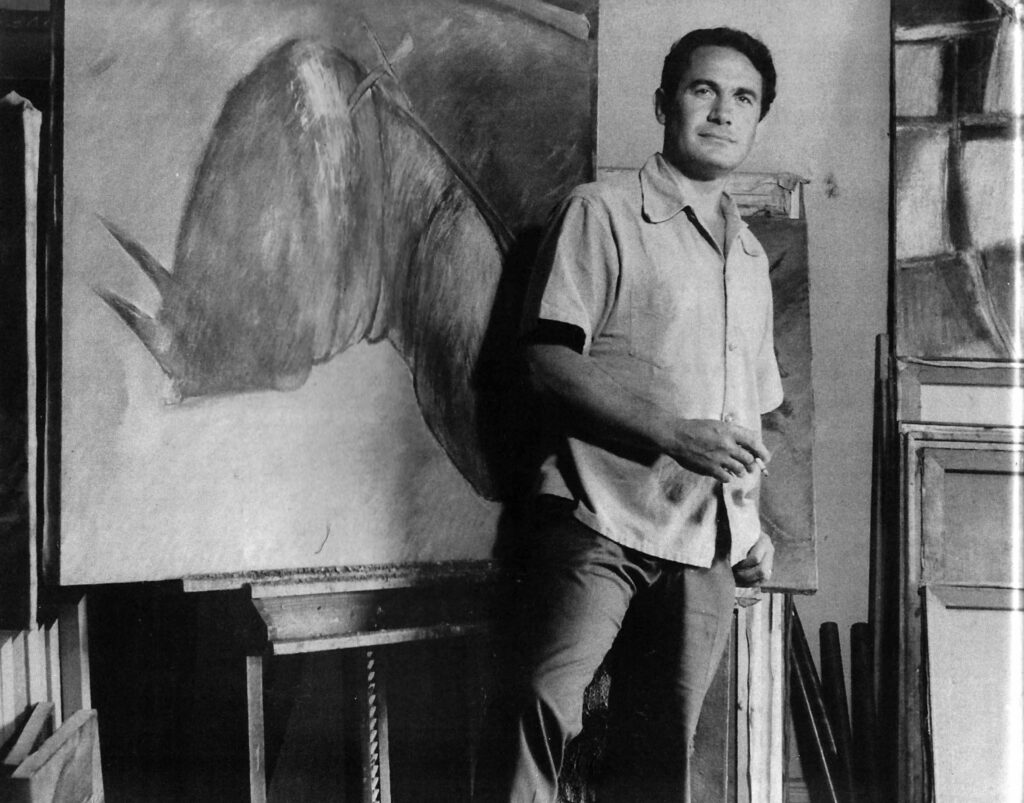
Writer and painter Yonia Fain (1914-2013) is one of those unique figures whose life story encapsulates a piece of Jewish history. Born in Kamenetsk-Podolsk, he left it in 1924 at age 10 when his father, a Menshevik, took the family first to Warsaw and then to Vilna to escape war and political unrest. From his youth Fain has expressed himself as both an artist and a writer. As a young man living in Warsaw, he worked for the Jewish Labor Bund as it sought to build a resistance against the Germans and the fascist Poles. His work in both these mediums has been shaped by his deep personal and political commitments and focuses on the anguish and injustice of the 20th century.

During WWII Fain sought refuge in Shanghai, China, for six years, where he painted and wrote poetry. His first volume, A tlie unter di shtern (A Gallows under the Stars), came out shortly after he emigrated to Mexico in 1947. In Mexico he taught Yiddish literature and attracted the attention of the artist Diego Rivera, who arranged an exhibition of his paintings at the prestigious Palacio de Bellas Artes. Fain’s mural dedicated to the victims of the Holocaust still graces the walls in the Pantheon Israelita in Mexico City.

In 1953 Fain moved to New York where he became a professor of art at Hofstra University until his retirement in 1983. He also achieved great prominence as a Yiddish writer, publishing two volumes of poetry, Gute orkhim (Good Guests, 1983) and Der finfter zman (The Fifth Season), as well as a collection of short stories, Nyu-yorker adresn (New York Addresses, 1995). In 1991 he won the coveted Manger Prize for Yiddish literature. He has published widely, both poetry and prose, in major Yiddish journals such as Di Goldene Keyt, Undzer Tsayt and Di Tsukunft, which he edited for many years.

Fain is a truly modern writer whose desire to erase the borders between poetry and prose, dream and reality, painting and writing is often powerfully represented in his work.

Although a Bundist and a freethinker and despite much sadness in his life, he was a man full of belief and optimism, a man, who at the end of the day could still say:

I believe that the spring dreams of reaching the river,
And the river the ocean.
And I believe that the trodden blade of grass
Has not grown green in vain,
For no reason whatsoever.

I believe that Yes and No
Want to reach each other,
And that in spring,
When it starts to rain
Even a stone smiles.

… And I believe with all my heart,
That although my heart has long been shattered
And pasted together with stones,
That the person who had said “Thank you” to life
Has not lived in vain.
— — From “I Believe,The Fifth Season, Trans. Sheva Zucker


Interviewer

Interviewer

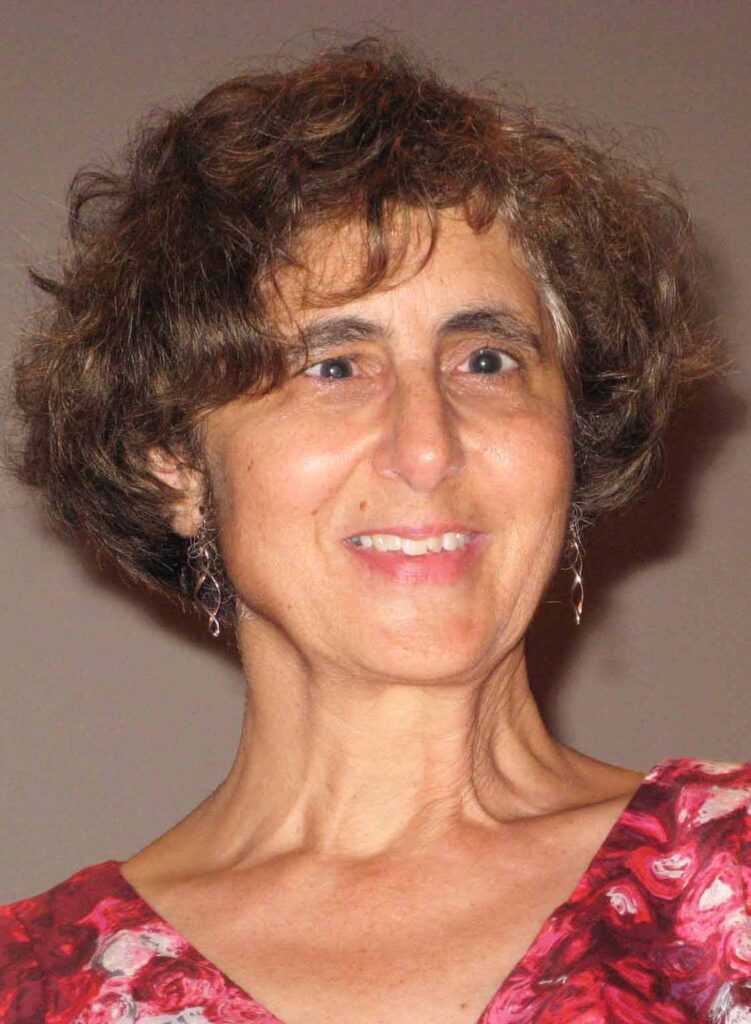
Sheva Zucker was the executive director of the League for Yiddish and the editor of its magazine Afn Shvel. She has taught and lectured on Yiddish language and literature on five continents and, for many years, in the Uriel Weinreich Program in Yiddish Language, Literature and Culture sponsored by the YIVO Institute for Jewish Research in New York City. She is the author of the textbooks Yiddish: An Introduction to the Yiddish Language, Literature & Culture, I and II. Her father spent six years as a refugee in Shanghai with Yonia Fain.


Director

Director

The films are directed and edited by Josh Waletzky, director and editor of Image before My Eyes and Partisans of Vilna, and the editor of Emmy Award-winning Itzhak Perlman: In the Fiddler’s House. Among other awards, Waletzky is the recipient of the Silver Ducat at the Mannheim International Film Festival for Image and First Prize at the Anthropos International Film Festival for Partisans. Other editing credits include Peabody Award-winning Revolution! (1997), the A.C.E. Eddie Award-nominated The Endurance: Shackleton’s Legendary Antarctic Expedition (2000), the Emmy Award-winning She Says: Women In News (2001).


Publication Information

The films are available in DVD format. They are a perfect program for a Yiddish circle, class, book group, your local Jewish or documentary film festival or for your own enjoyment.