חוה ראָזענפֿאַרב: דאָס בלעזעלע וואָר
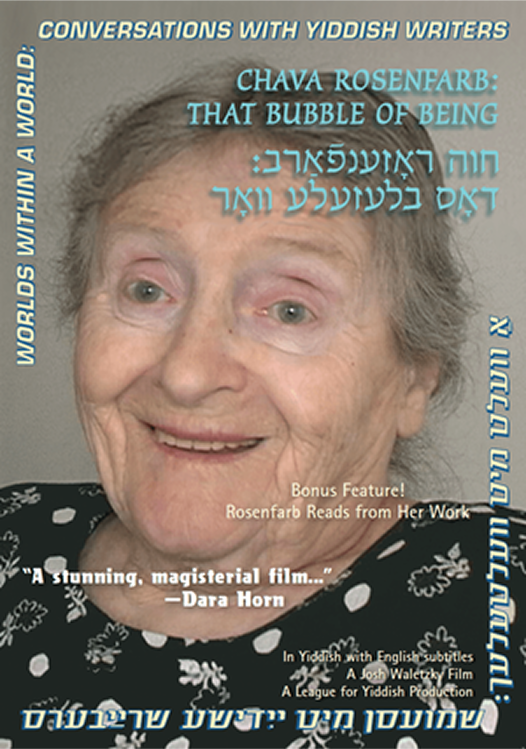
Chava Rosenfarb: That Bubble of Being


Chava Rosenfarb:
That Bubble of Being

DVD Disk $35


Film Description

In an article in Midstream Chava Rosenfarb wrote:
“… in another European town Theodore Adorno
has come out with the sweeping declaration that
there is no poetry after Auschwitz. A meaningful,
powerful declaration, but it has nothing to do with me.”
(Midstream, April 1989)

In the film Chava Rosenfarb: That Bubble of Being, Chava Rosenfarb, noted Canadian Yiddish writer and major Holocaust literary figure, discusses her life in Lodz, Poland before the Holocaust, her years in the Lodz Ghetto, in Auschwitz, in Bergen-Belsen, and her career as a Yiddish writer in Montreal. Despite Adorno’s declaration Rosenfarb wrote copiously, eloquently and movingly about the Holocaust even though she herself admits in the film that she doesn’t know if she has found the right words to talk about it.

She offers insights into writing in general and specifically about the Holocaust, life and love, and the post-Holocaust Yiddish literary milieu in Canada. Intertwined with these topics she reads several of her poems. This film is an unscripted interview between Anna Fishman Gonshor and Chava Rosenfarb just before the writer’s passing, enhanced by photo stills and music. The interview is conducted entirely in Yiddish with accurate and complete English subtitles. The DVD also includes a bonus feature of 35 minutes of Rosenfarb reading from her poetry and prose subtitled with translations by Kathryn Hellerstein.

Despite her advanced years and the frequent discussion of the Holocaust, Rosenfarb makes a delightful, captivating, sometimes even funny, subject.

Anna Fishman Gonshor, Faculty Lecturer of Yiddish Studies in the Department of Jewish Studies at McGill University, is also on the faculty of the Uriel Weinreich Summer Program in Yiddish Language, Literature and Culture at the YIVO Institute for Jewish Research. As a translator, her work includes film, academic articles and archival materials. She is a native Yiddish-speaker with a lifetime involvement with Yiddish.

Biography

Biography

Chava Rosenfarb (1923-2011) was a leading figure in post-World War II Yiddish literature. Born in Lodz, Poland she completed secular Yiddish school and Polish gymnasium in this center of Jewish life. She loved poetry and began writing at age eight. Like many Jews of the city, Rosenfarb was incarcerated in the Lodz ghetto from 1940 to 1944. Here, waking up at dawn from her bed of chairs, she composed lyric poetry in bookkeeping registers in the hours before going to work at her various ghetto jobs. These were wrested from her in Auschwitz. However, in the labor camp Sasel a sympathetic German gave her the stub of a pencil which she kept in her shoe and used to write out her destroyed poems on the ceiling above her bunk each night. By the time she was sent to Bergen Belsen, she had been rereading them each evening and knew them by heart.

Her first collection of ghetto poems, Di balade fun nekhtikn vald [The Ballad of Yesterday’s Forest], was published in London in 1947. After the liberation she moved to Belgium and remained there until 1950 when she immigrated to Montreal. There she wrote and published the play, Der foigl fun geto [The Bird of the Ghetto], (1958) about the martyrdom of the Vilna ghetto partisan leader Isaac Wittenberg, which was translated into Hebrew and performed by the Habimah, Israel’s National Theatre, in 1966. Finding that neither poetry nor drama could begin to express the range and depth of her feelings about the Holocaust, Rosenfarb turned to fiction. In 1972 she published what is considered her masterpiece, Der boym fun lebn [The Tree of Life], a three-volume novel about the Lodz ghetto.

Whether in poetry, drama, short story or novel, all of Rosenfarb’s work speaks from her experience during the Holocaust. As she herself said in an interview for CBC Radio (2001), “The ghetto was the soil on which I really grew,…  What I saw, what I learned there gave me my outlook on the human condition, on how people are, on life in general.”

Among the many awards and honors Rosenfarb has received are the I.J. Segal Prize, 1993, the Manger Prize,1979, the Helen and Stan Vine Canadian Jewish Book Award in 2005 and a Modern Language Association Book Award for Yiddish Studies in 2006. She received an honorary Ph.D. from the University of Lethbridge,in the Canadian city of the same name, in which she resided until her death.


Interviewer

Interviewer

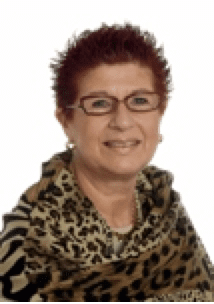
Anna Fishman Gonshor, Faculty Lecturer of Yiddish Studies in the Department of Jewish Studies at McGill University, is also on the faculty of the Uriel Weinreich Summer Program in Yiddish Language, Literature and Culture at the YIVO Institute for Jewish Research. As a translator, her work includes film, academic articles and archival materials. She is a native Yiddish-speaker with a lifetime involvement with Yiddish.

Director

Director

The films are directed and edited by Josh Waletzky, director and editor of Image before My Eyes and Partisans of Vilna, and the editor of Emmy Award-winning Itzhak Perlman: In the Fiddler’s House. Among other awards, Waletzky is the recipient of the Silver Ducat at the Mannheim International Film Festival for Image and First Prize at the Anthropos International Film Festival for Partisans. Other editing credits include Peabody Award-winning Revolution! (1997), the A.C.E. Eddie Award-nominated The Endurance: Shackleton’s Legendary Antarctic Expedition (2000), the Emmy Award-winning She Says: Women In News (2001).


Publication Information

Chava Rosenfarb: That Bubble of Being. Documentary. 75 minutes plus 35-minute bonus featuring Rosenfarb reading from her work. Director: Joshua Waletzky. Interviewer: Anna Fishman Gonshor. Executive Producer: Sheva Zucker. Available on DVD (disk). In Yiddish with English subtitles. A League for Yiddish Production, 2015.